

Dussehra: Celebrating the Victory of Good over Evil
A festival of courage, righteousness and the triumph of good over evil.
Also Known As: Vijayadashami | Dasara | Dashain (Nepal) Celebrates: Lord Rama’s victory over Ravana and Goddess Durga’s victory over Mahishasura When: The tenth day (Dashami) of the bright fortnight of Ashvina, right after the nine nights of Navratri. In 2026: Tuesday, 20 October Celebrated: Across India, in Nepal and by Hindu communities worldwide
Dussehra is observed through Ramlila performances, the burning of Ravana effigies, Durga Puja traditions, prayers and gatherings with family and friends.
What Is Dussehra?
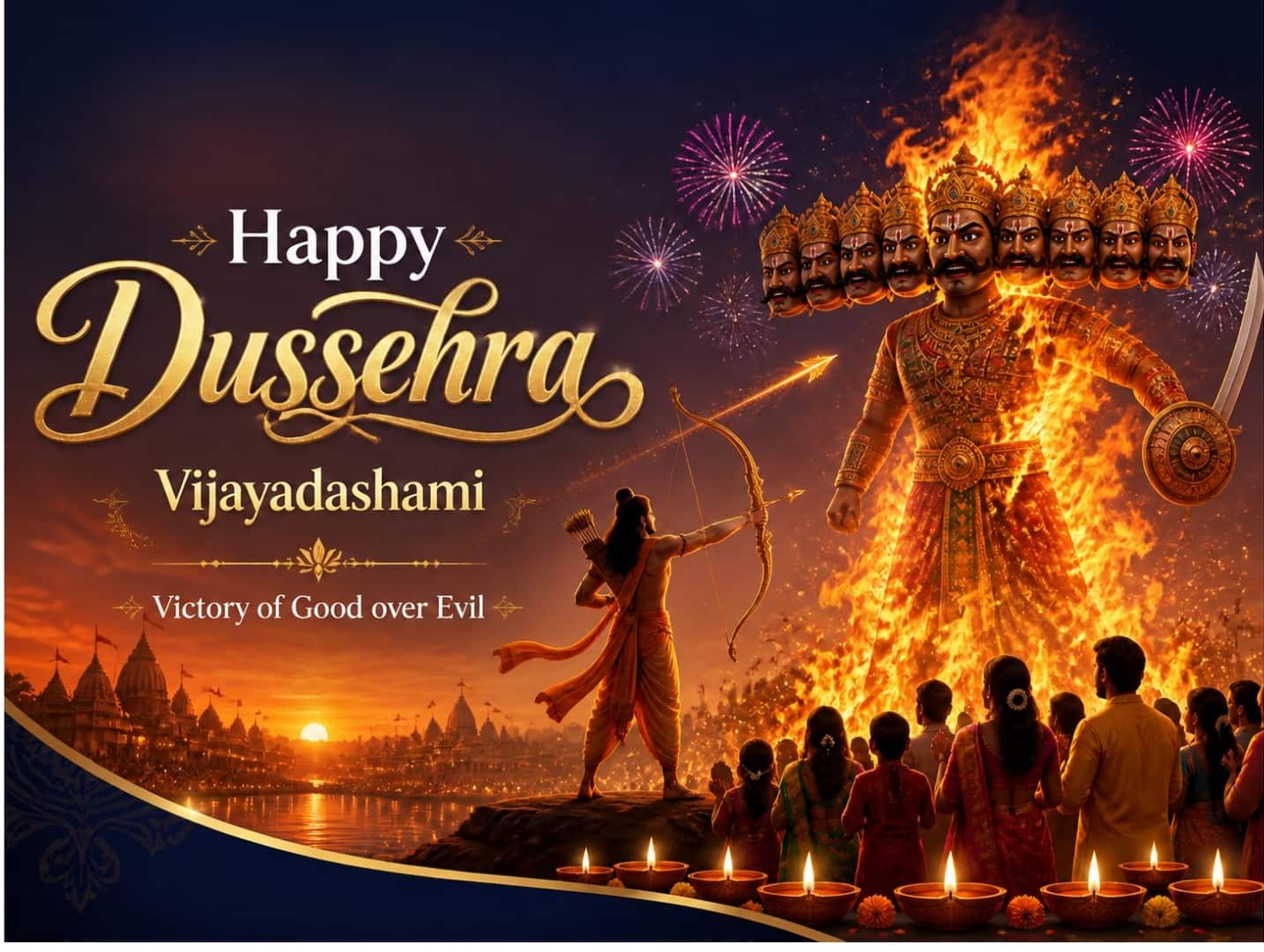
Dussehra, also called Vijayadashami, is one of the most widely celebrated Hindu festivals. It marks the tenth day after the start of Sharad Navratri and is associated with two great victories of good over evil: Lord Rama’s triumph over the demon king Ravana, and Goddess Durga’s triumph over the buffalo demon Mahishasura.
The name itself tells the story. Vijaya means victory and Dashami means the tenth day. In many parts of India, Dussehra is also seen as an especially auspicious day to begin something new, whether that is learning, a new venture or a new chapter.
Did you know?
The word Dussehra is commonly traced to Dasha-hara, often understood as the “defeat of the ten-headed one”, a reference to Ravana.
Why Is Dussehra Celebrated?
Dussehra is celebrated for two stories that carry the same message: that righteousness prevails, however powerful injustice may seem.
In the Ramayana tradition, Rama defeated Ravana, who had abducted Sita. In the Devi tradition, Goddess Durga defeated Mahishasura after a battle said to have lasted nine nights, which is why Dussehra falls at the end of Navratri. Which story is told most strongly depends on the region.
The deeper meaning of Dussehra
⚖️ Dharma A reminder that righteousness and truth are worth standing for.
🏹 Courage The festival celebrates the strength to face wrongdoing instead of turning away from it.
🔥 Letting Go Ravana’s ten heads are often interpreted as ten inner flaws, such as pride, anger and greed. Burning the effigy is a symbol of leaving them behind.
✨ Good Over Evil Both stories show light overcoming darkness and justice overcoming tyranny.
The Story Behind Dussehra
- The Exile: Lord Rama, along with Sita and Lakshmana, lived in the forest for fourteen years, following his father’s word.
- Sita Is Taken: According to the Ramayana, Ravana, the king of Lanka, abducted Sita and took her to his kingdom.
- An Army of Allies: Rama, Lakshmana and Hanuman, together with the vanara army, set out to bring Sita back, and a bridge was built to reach Lanka.
- Victory: After a great battle, Rama defeated Ravana. This victory is remembered every year as Vijayadashami.
The story of Rama and Ravana, retold through Ramlila performances, is central to how Dussehra is understood across much of North India.
How Is Dussehra Celebrated?
🎭 Ramlila Dramatic retellings of the Ramayana are staged in towns and cities, often over several nights leading up to Dussehra.
🔥 Ravana Dahan Large effigies of Ravana, and often Kumbhakarna and Meghnad, are set alight at dusk, with crowds, fireworks and fairs around them.
🛕 Durga Puja and Bijoya Dashami In eastern India, the day marks the farewell to Goddess Durga, with processions and the immersion of idols.
⚒️ Ayudha Puja and Shami Puja Tools, books, vehicles and instruments are worshipped as a mark of gratitude, and the Shami tree is revered in some traditions.
📚 Vidyarambham In parts of South India, children are introduced to reading and writing on this day, as it is considered an auspicious beginning.
🍬 Sweets and Togetherness Families prepare festive food, exchange greetings and visit friends and relatives.
Dussehra Across India
North India and Delhi
Ramlila performances build up to Dussehra, which ends with Ravana Dahan in open grounds across towns and cities.
Kullu, Himachal Pradesh
Kullu Dussehra begins on Vijayadashami and continues for about a week, with a grand procession of local deities.
Mysuru, Karnataka
Mysuru Dasara is a royal tradition spanning ten days, with illuminated palaces, cultural events and a grand procession on Vijayadashami.
West Bengal and Eastern India
Dussehra coincides with Bijoya Dashami, the final day of Durga Puja, marked by idol immersions and greetings.
Chhattisgarh
The Bastar Dussehra is known for a long, tribal-rooted tradition centred on the local goddess, and is quite different from the Ravana Dahan seen elsewhere.
Madhya Pradesh and Maharashtra
Communities celebrate with Ravana Dahan, fairs and family gatherings, and in some places exchange leaves as symbolic “gold” with elders and friends.
What Can We Learn From Dussehra?
Stand for What Is Right
Both legends remind us that truth and fairness are worth defending.
Overcome Your Inner Ravana
The festival invites us to reflect on pride, anger and ego, and to let them go.
Power Needs Humility
Ravana is remembered as a learned and powerful king whose arrogance led to his fall.
Begin With Confidence
Vijayadashami is traditionally seen as a good day to start something new with determination.
A Festival That Brings People Together
Dussehra is more than a celebration of a victory. It is a celebration of courage, truth and the belief that goodness can overcome the toughest challenges.
From neighbourhood Ramlila grounds to grand processions and quiet family prayers, Dussehra brings people together through stories, traditions, food and shared joy.
Celebrating India’s Rich Cultural Heritage
At Virtual Clone, we value the diverse traditions and festivals that bring people together.
Wishing everyone a joyful and blessed Dussehra.
शुभ विजयादशमी 🙏
Frequently Asked Questions About Dussehra
What is Dussehra?
Dussehra, or Vijayadashami, is a Hindu festival celebrating the victory of good over evil, especially Lord Rama’s victory over Ravana and Goddess Durga’s victory over Mahishasura.
When is Dussehra in 2026?
Dussehra falls on Tuesday, 20 October 2026.
Why is Dussehra celebrated?
It commemorates the triumph of righteousness over evil as told in the Ramayana and in the stories of Goddess Durga.
Why are Ravana effigies burned on Dussehra?
The burning of Ravana’s effigy symbolises the destruction of evil and, for many, the letting go of inner flaws such as pride and anger.
What is the difference between Navratri and Dussehra?
Navratri is the nine-night festival devoted to Goddess Durga. Dussehra is the tenth day that follows it.
How do people celebrate Dussehra?
Common traditions include Ramlila, Ravana Dahan, Durga idol immersion, Ayudha Puja, fairs, processions and family gatherings.
Where is Dussehra celebrated?
Across India and Nepal, and by Hindu communities worldwide, with famous celebrations in Delhi, Kullu, Mysuru, Bastar and West Bengal.