

Introduction: Why Global Firms Are Rethinking Bookkeeping Models
Across the world, accounting firms and growing businesses are facing the same operational challenge: Should bookkeeping be managed in-house or outsourced to a dedicated offshore team?
In 2026, rising operational costs, talent shortages, compliance pressure, and increasing demand for faster turnaround times are forcing firms to rethink traditional staffing models.
This is why many global firms are now exploring outsourced bookkeeping services as a scalable and cost-efficient alternative to large in-house teams.
Understanding the True Cost of In-House Bookkeeping Teams
Most firms underestimate the real cost of maintaining an internal bookkeeping department.
The expense is not limited to salaries alone. In-house bookkeeping also includes hidden operational costs that continue to increase as firms scale.
Key Cost Components of In-House Teams
- Employee salaries and bonuses
- Recruitment and onboarding expenses
- Payroll taxes and employee benefits
- Office infrastructure and equipment
- Software licenses and subscriptions
- Training and upskilling programs
- Paid leave and non-productive hours
- Team management and supervision costs
- Employee attrition and replacement costs
What Does Outsourced Bookkeeping Cost?
Outsourced bookkeeping follows a flexible and scalable model compared to traditional hiring.
Instead of maintaining fixed overheads, firms gain access to trained professionals while paying only for productive work capacity.
Typical Cost Structure of Outsourced Bookkeeping
- Monthly or flexible engagement pricing
- No recruitment or HR management expenses
- No office infrastructure costs
- Access to trained bookkeeping professionals
- Flexible scaling during peak workloads
Beyond Cost: The Hidden Efficiency Difference
Operational efficiency, turnaround time, scalability, and consistency are equally important in today’s competitive accounting environment.
Common Challenges with In-House Teams
- Heavy dependency on individual employees
- Limited working capacity during peak periods
- Recruitment delays and staffing shortages
- Knowledge loss due to attrition
- Increased management workload
Advantages of Outsourced Bookkeeping Teams
- Access to process-driven professionals
- Faster turnaround times
- Reduced operational pressure
- Scalable support during peak workloads
- Improved workflow consistency
- Access to white labelled service models
When Does In-House Bookkeeping Still Make Sense?
- Businesses require constant on-site coordination
- Financial processes are highly localised
- Workloads remain stable throughout the year
Why Global Firms Are Increasingly Choosing Outsourced Bookkeeping
- Improve profitability without increasing fees
- Reduce operational pressure on internal teams
- Address global talent shortages
- Build scalable operational structures
- Maintain flexibility during seasonal workloads
How Virtual Clone Supports Global Accounting Firms
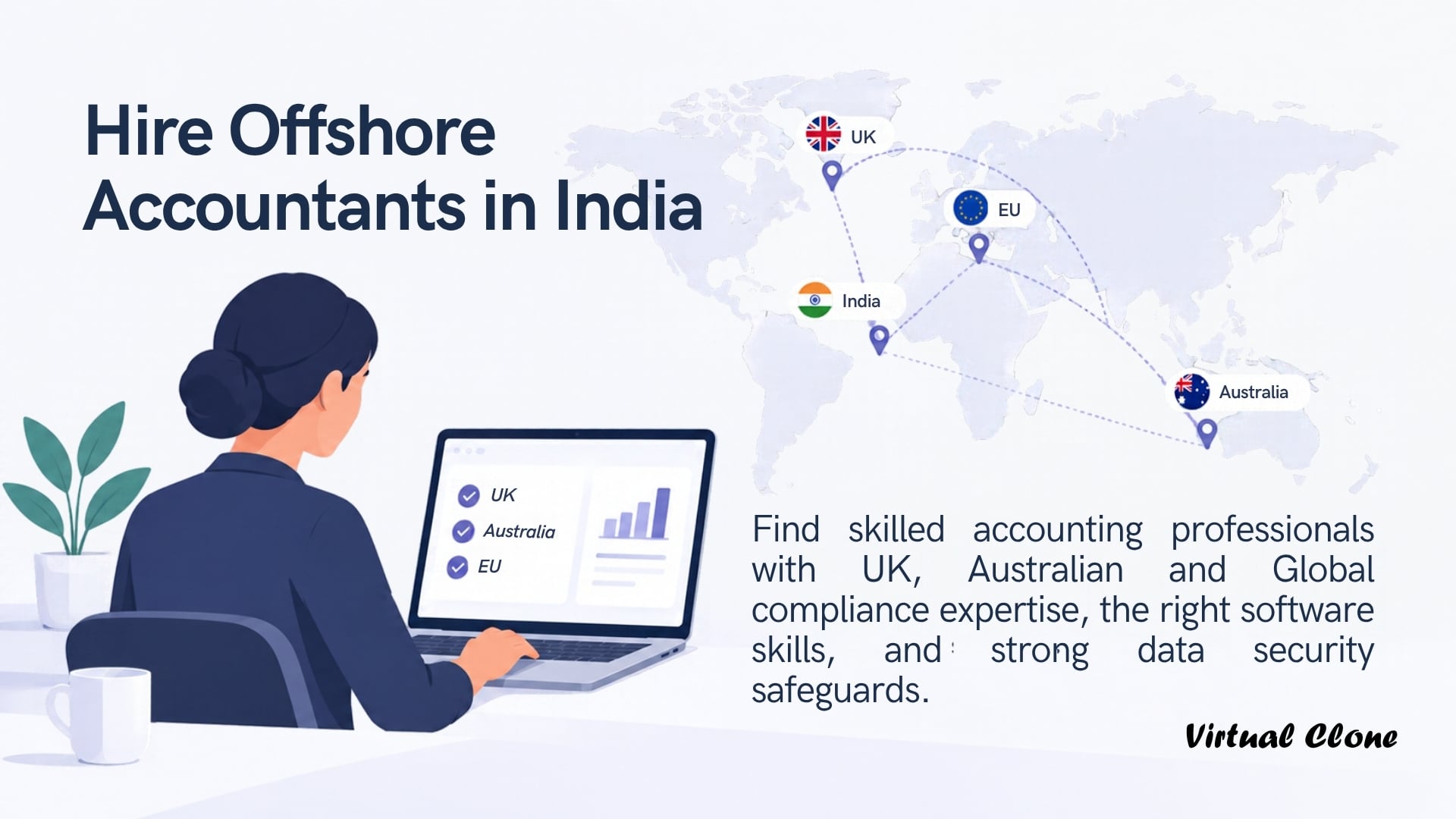
Virtual Clone supports accounting firms, CPAs, tax professionals, and businesses worldwide through dedicated offshore bookkeeping and accounting support services.
What Firms Receive with Virtual Clone
- Skilled bookkeeping and accounting professionals
- Flexible engagement models
- Dedicated offshore teams
- White labelled service support
- Scalable staffing solutions
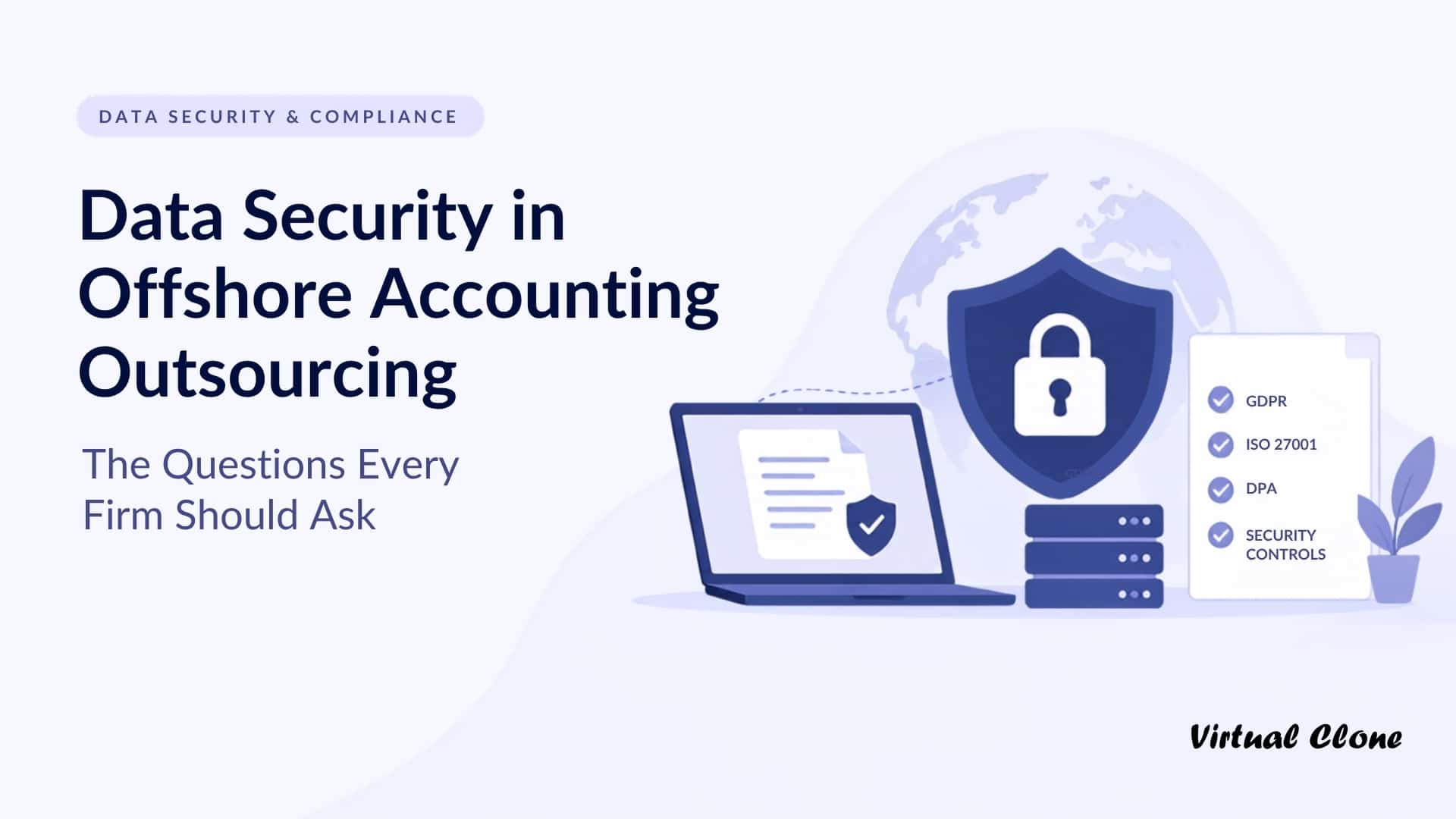
- Strong data security protocols
- GDPR-conscious operational processes
Frequently Asked Questions (FAQs)
Is outsourced bookkeeping cheaper than maintaining an in-house team?
Yes. Outsourced bookkeeping significantly reduces recruitment, infrastructure, employee management, and operational overhead costs compared to traditional in-house staffing.
Can outsourced bookkeeping teams scale during busy seasons?
Yes. Dedicated offshore teams can quickly increase or reduce headcount based on workload, helping firms manage seasonal demand more efficiently.
Is outsourced bookkeeping secure?
Professional outsourcing providers implement strict security measures, access controls, confidentiality agreements, and GDPR-conscious processes to protect sensitive financial information.
What is a white labelled bookkeeping service?
A white labelled bookkeeping service allows offshore professionals to operate as an extension of your business while maintaining your firm’s branding, workflows, and client experience.
Conclusion: Outsourcing Is Becoming a Strategic Growth Model
In 2026, firms are prioritising scalability, flexibility, operational efficiency, and business continuity.
For accounting firms and businesses looking to grow sustainably without increasing overhead pressure, outsourced bookkeeping has become a strategic operational model.
Looking to reduce operational costs while improving scalability and efficiency?
Explore Virtual Clone’s outsourced bookkeeping and offshore accounting support services to discover how dedicated offshore teams can help your business scale smarter in 2026.