

The accounting industry is changing rapidly. Accounting Firms across the world are facing increasing compliances leading to increased workloads, talent shortages, rising operational costs, and growing client expectations. As a result, many accounting practices are exploring offshore staffing models to improve efficiency and support long-term growth.
Building an offshore accounting team is no longer just a cost-saving strategy. Now, it has become a strategic business decision that helps accounting firms scale operations, improve service delivery, and gain access to skilled accounting professionals without the challenges of local recruitment.
This guide explains how accounting firms can build a dedicated offshore accounting team that operates as a seamless extension of their practice.
Why Accounting Firms Are Building Offshore Accounting Teams
Accounting firms worldwide are experiencing several challenges:
- Difficulty hiring qualified accounting professionals
- Rising recruitment and operational costs
- Increasing compliance and reporting requirements
- Seasonal workload fluctuations
- Growing demand for advisory and value-added services
- Pressure to improve turnaround times without increasing overheads
A dedicated offshore accounting team enables firms to:
✓ Increase operational capacity
✓ Improve turnaround times
✓ Access skilled accounting professionals
✓ Reduce hiring pressure
✓ Scale efficiently during peak seasons
✓ Focus internal resources on advisory and client relationships
Rather than replacing in-house teams, offshore accounting professionals work alongside existing staff and become an integrated part of the firm’s operations.
What Is a Dedicated Offshore Accounting Team?
A dedicated offshore accounting team consists of professionals who work exclusively for your accounting firm and follow your processes, workflows, service standards, and communication practices.
Unlike traditional outsourcing models that assign work to rotating resources, dedicated offshore teams provide:
- Consistent communication
- Higher accountability
- Better understanding of client expectations
- Long-term knowledge retention
- Greater process familiarity
- Improved collaboration with internal teams
Over time, offshore professionals become an extension of your accounting practice and contribute to operational continuity and business growth.
Step 1: Define the Structure of Your Offshore Accounting Team
Before hiring, offshore professionals, clearly identify which services you want the team to manage.
Common responsibilities include:
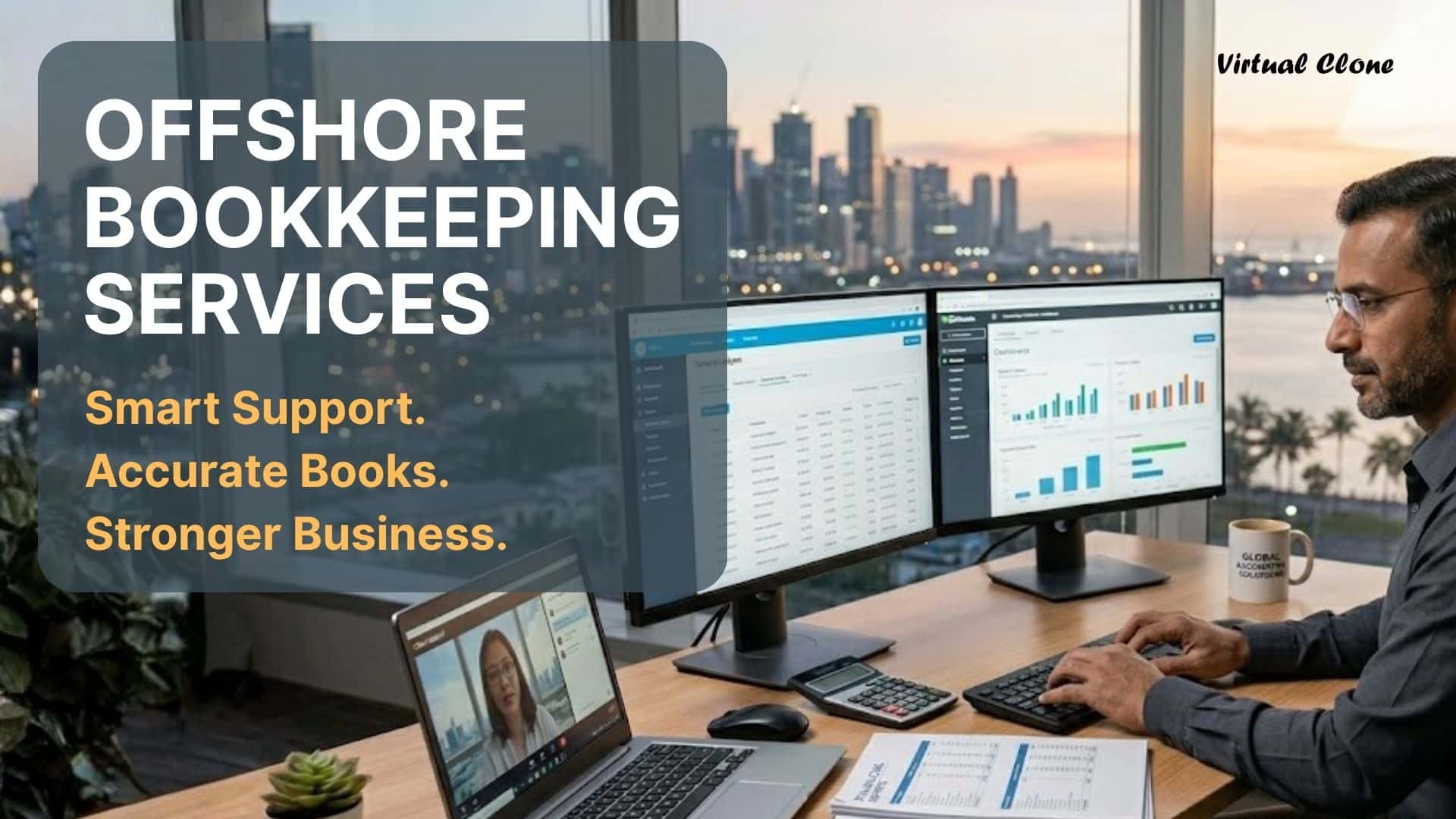
Bookkeeping Services
- Bank reconciliations
- Sales and purchase ledger management
- Invoice processing
- Transaction posting
- Expense management
Payroll Support
- Payroll processing
- Employee compensation calculations
- Pension administration
- Payroll reporting
- Compliance documentation
Accounts Preparation
- Management accounts
- Financial statements
- Year-end accounts
- Supporting schedules
- Reporting documentation
Tax Support
- Personal tax returns
- Corporate tax computations
- Tax documentation
- Compliance support
- Tax reporting assistance
Administrative Support
- Document management
- CRM administration
- Workflow coordination
- Data management
- Client onboarding support
Starting with clearly defined responsibilities simplifies onboarding and improves operational efficiency.
Step 2: Choose the Right Offshore Accounting Partner
Selecting the right offshore partner plays a major role in the success of your offshore accounting strategy.
Consider the following factors: Talented professionals, transparent pricing
Industry Experience
Choose a provider with proven experience supporting accounting firms and professional service businesses.
Technical Expertise
Ensure the team has experience working with cloud accounting platforms and practice management systems.
Data Security
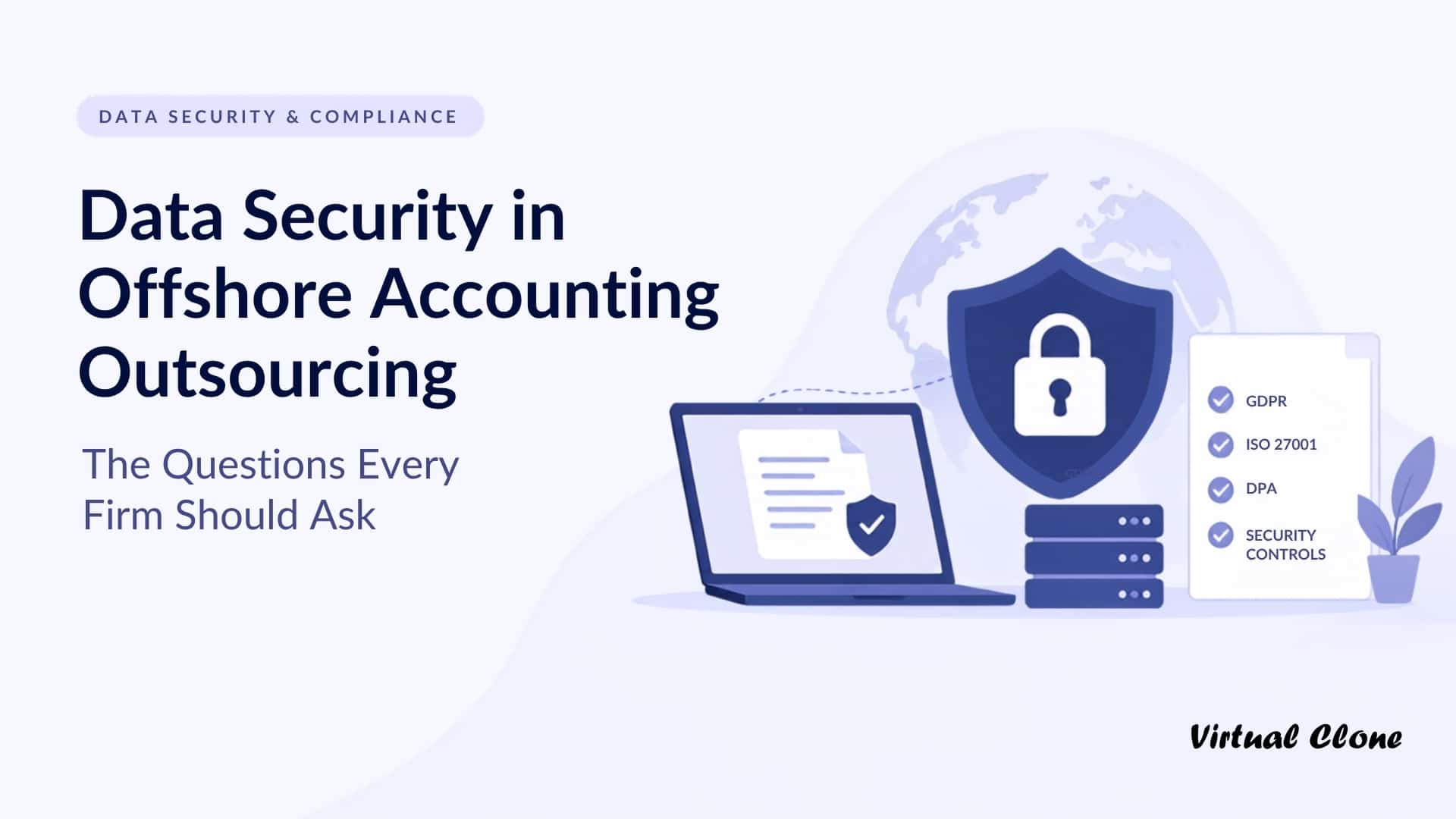
The provider should implement robust data security measures, access controls, confidentiality agreements, and internationally accepted information security practices.
Communication Capabilities
Look for teams that can align with your business hours and provide consistent communication.
Quality Control Processes
A reliable provider should have documented procedures, review mechanisms, and performance management systems.
Scalability
The offshore partner should be capable of increasing or reducing resources based on your business requirements.
Step 3: Build a Strong Onboarding Process
A structured onboarding framework significantly improves the success of offshore teams.
Best practices include:
Document Processes Clearly
Create detailed process documentation and standard operating procedures for recurring tasks.
Provide System Access Securely
Offer controlled access to accounting software and communication tools.
Establish Communication Channels
Implement collaboration platforms and define communication protocols.
Define Escalation Procedures
Set review processes, reporting structures, and issue escalation mechanisms.
Start with Knowledge Transfer
Allow offshore professionals to shadow existing workflows before taking full ownership of tasks.
A well-planned onboarding process reduces errors and accelerates productivity.
Step 4: Maintain Quality Control and Communication
Effective communication and quality management systems are essential for offshore success.
Monitor key performance indicators such as:
- Turnaround time
- Accuracy rates
- Task completion consistency
- Response times
- Team productivity
- Client satisfaction levels
Regular meetings, feedback sessions, process reviews, and continuous training help maintain service standards and improve long-term performance.
Step 5: Scale Your Offshore Accounting Team Strategically
Successful offshore teams usually grow in phases.
Many firms begin with bookkeeping support and gradually expand into:
- Payroll services
- Accounts preparation
- Tax support
- Administrative assistance
- Management reporting
- Client support functions
A phased approach allows firms to optimise workflows, build trust, and increase offshore responsibilities with confidence.
One of the biggest advantages of offshore staffing is operational flexibility. Accounting firms often experience fluctuating workloads during reporting periods, tax seasons, year-end activities, and periods of business growth.
A scalable offshore model allows firms to adjust team size based on workload requirements without the long-term costs associated with permanent hiring.
White-Label Offshore Accounting Services
Many accounting firms prefer white-label offshore accounting services.
Under this model, offshore professionals work as an extension of your practice while following your:
- Branding
- Processes
- Service standards
- Communication protocols
- Delivery expectations
Clients continue receiving a seamless experience while your firm gains additional capacity and operational support.
Benefits of Building an Offshore Accounting Team
Accounting firms that successfully implement offshore teams often experience:
Improved Scalability
Expand operations without extensive recruitment cycles.
Cost Efficiency
Optimise operational costs while maintaining service quality.
Access to Skilled Talent
Build teams with accounting professionals experienced in global accounting processes and cloud technologies.
Increased Productivity
Reduce administrative burdens and improve turnaround times.
Better Resource Allocation
Allow internal teams to focus on advisory services and strategic client relationships.
Business Continuity
Maintain service delivery during seasonal spikes and changing market conditions.
Why Choose Virtual Clone?
Virtual Virtual helps accounting firms build dedicated offshore accounting teams that function as a true extension of their practice.
Our offshore professionals support firms with:
- Bookkeeping Services
- Payroll Support
- Accounts Preparation
- Tax Assistance
- Administrative Support
- White-Label Accounting Services
- Recruitment Process Outsourcing (RPO)
We focus on creating scalable, secure, and integrated offshore teams that align with your systems, workflows, and business objectives.
Conclusion
Building an offshore accounting team in 2026 is no longer simply about reducing costs. It is a strategic growth initiative that enables accounting firms to increase capacity, improve efficiency, overcome hiring challenges, and deliver exceptional client service.
With the right partner, onboarding framework, communication systems, and quality controls, accounting firms can build high-performing offshore teams that contribute to sustainable long-term growth.
Frequently Asked Questions
Q: What is an offshore accounting team?
A: An offshore accounting team is a group of accounting professionals located in another country who work exclusively or partially for your firm and support functions such as bookkeeping, payroll, accounts preparation, tax support, and administration.
Q: Why are accounting firms building offshore accounting teams?
A: Accounting firms build offshore teams to overcome talent shortages, manage rising costs, improve scalability, increase operational efficiency, and maintain service quality during periods of growth.
Q: How much can an accounting firm save through offshore staffing?
A: Savings vary based on location and services required. However, offshore staffing typically helps firms optimise operational costs while increasing productivity and business capacity.
Q: Is offshore accounting secure?
A: Yes. Professional offshore providers implement secure access controls, confidentiality agreements, data encryption, and internationally accepted security practices to protect client information.
Q: What services can offshore accounting teams provide?
A: Offshore teams commonly support bookkeeping, payroll processing, accounts preparation, tax assistance, management reporting, administrative support, and practice management activities.
Q: Can offshore teams work according to our business hours?
A: Yes. Dedicated offshore teams can align their schedules with your business hours and communication requirements to ensure seamless collaboration.
Q: How long does it take to onboard an offshore accounting team?
A: Most firms begin receiving operational support within a few weeks, depending on workflow complexity, documentation availability, and training requirements.
Q: Can offshore accounting teams use our existing software?
A: Yes. Offshore accounting professionals can work using the same cloud accounting platforms, practice management software, and collaboration tools already used by your firm.
Q: What is a white-label offshore accounting service?
A: A white-label offshore accounting service allows offshore professionals to operate as an extension of your accounting practice while following your branding, workflows, and client delivery standards.
Q: Can offshore teams scale during busy seasons?
A: Yes. Offshore staffing models provide flexibility to increase or reduce team size during year-end reporting periods, tax seasons, compliance deadlines, and periods of business growth.
Q: Will offshore accounting affect service quality?
A: When properly onboarded and managed, dedicated offshore teams often improve turnaround times, process consistency, and operational efficiency while maintaining high service standards.
Q: Which accounting firms benefit most from offshore teams?
A: Small, mid-sized, and growing accounting firms that want to scale efficiently, improve profitability, and overcome recruitment challenges often benefit significantly from offshore accounting teams.