

Every accounting firm we talk to is wrestling with some version of the same problem. Client demand keeps growing, Making Tax Digital for Income Tax is adding new reporting obligations firm by firm, and qualified accountants remain difficult to find and even harder to keep. Firms in Australia and across the EU are living through their own versions of the same squeeze: rising compliance workloads, tighter margins, and a talent pool that isn't growing fast enough to keep pace.
This is the environment in which accounting outsourcing in India has moved from a niche, cost-driven experiment to a mainstream operating decision for firms of every size. Sole practitioners and multi-partner practices alike are building offshore teams in India to handle compliance-heavy work, so their UK, Australian and EU-based staff can focus on advisory relationships and higher-value client work.
In this guide, we look at why so many accounting firms are choosing this model, what it actually involves day to day, and how to get started in a way that protects your client relationships and your reputation.
What Is Accounting Outsourcing in India?
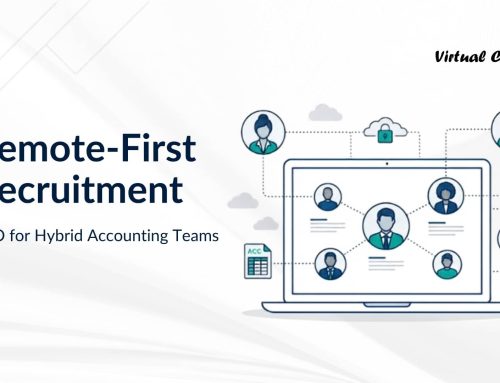
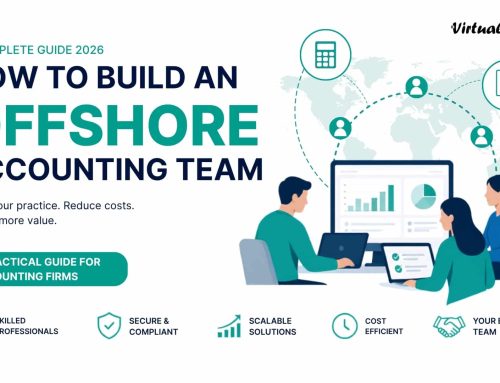
This means engaging a dedicated offshore team, based in India, to carry out accounting, bookkeeping, tax and payroll processes on behalf of your firm, working inside your own systems, under your own review process, and reporting to your own partners. It isn’t the same as hiring an individual freelancer, and it isn’t a call-centre model either. A properly run engagement functions as an extension of your practice: the same software, the same client files and the same quality standards, delivered by a team that is exactly similar to your inhouse team, just based in a different time zone.
India has built one of the world’s largest talent pools of accounting, bookkeeping and finance professionals over the past two decades, many trained against UK, Australian and international accounting standards, and a growing number holding ACCA, CA or equivalent qualifications. That combination of scale, training and English-language fluency is a large part of why this approach has become the default choice for so many practices, rather than outsourcing to other regions.
Why Firms Are Choosing to Outsource Accounting to India
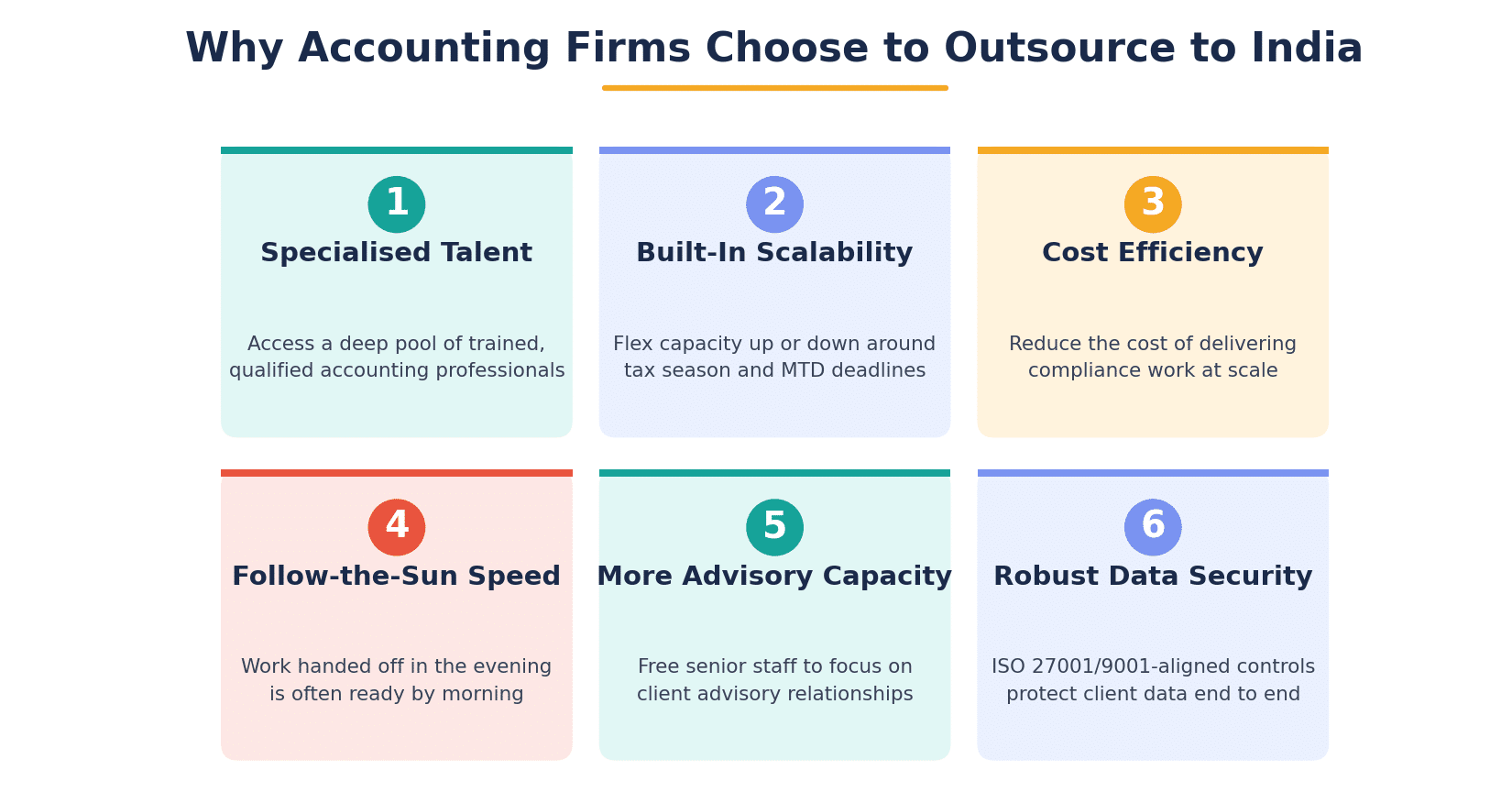
The reasons firms give for adopting accounting outsourcing in India tend to fall into a handful of consistent themes.
Access to Deep, Specialised Talent
Recruiting and retaining qualified accountants and bookkeepers has become one of the hardest parts of running a practice. Outsourcing gives firms access to a much larger, specialised talent pool without competing in an already tight local hiring market.
Built-In Scalability for Peak Season and Regulatory Change
Tax season, year-end and the phased rollout of Making Tax Digital all create sharp, predictable spikes in workload. An offshore team can flex up or down around these cycles far more easily than a firm can hire and release local staff.
Meaningful Cost Efficiency
Cost is rarely the only driver, but it is a real one. Firms typically see a worthwhile reduction in the cost of delivering compliance work once that work moves offshore, freeing up budget to invest in advisory capability. Exact savings vary by firm and scope, and any specific figures should be benchmarked against your own numbers before you rely on them.
Time Zone Advantage: Follow-the-Sun Turnaround
India’s time zone creates a natural follow-the-sun advantage: work handed off towards the end of the UK day or during the Australian working day can be progressed overnight, so your team can return the next morning to work that’s ready for review.
Freeing Senior Staff for Advisory Work
This is the shift we see matter most over time. Once compliance and processing work moves offshore, partners and senior staff have room to build the advisory relationships that drive long-term revenue and client retention.
Enterprise-Grade Data Security and Compliance
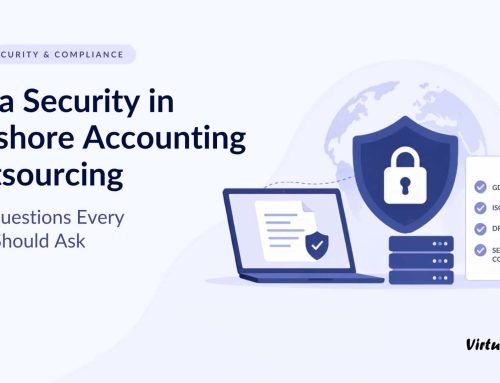
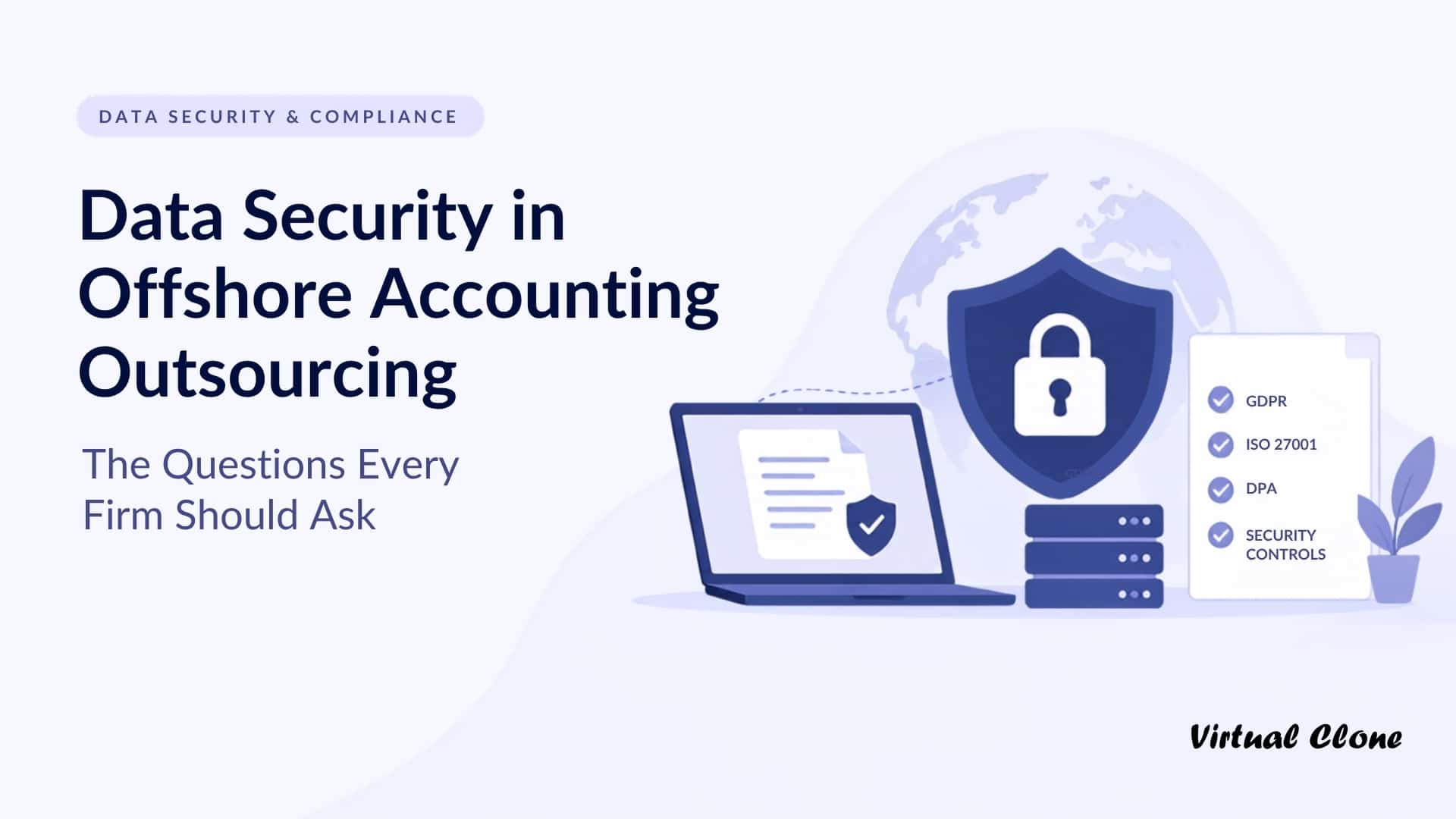
Reputable outsourcing partners operate under recognised information security and quality frameworks such as ISO 27001 and ISO 9001, with defined access controls, encryption and audit trails covering client data at every stage of the engagement.
In-House Team vs. Outsourcing to India
Factor |
Building an In-House Team |
Outsourcing to India |
|---|---|---|
| Time to hire and onboard | Weeks to months in a competitive market | Few days to a week with an established partner |
| Access to specialist skills | Limited to the local talent pool | A broad pool of qualified, trained professionals |
| Peak-season flexibility | Fixed headcount that is hard to flex | Capacity that can scale up or down with demand |
| Ongoing management overhead | Recruitment, payroll, HR and benefits | Managed by the outsourcing partner |
| Continuity risk | Exposed to staff turnover and leave | Backed by a team rather than a single individual |
| Typical cost profile | Full local salary, overhead and benefits | Generally more cost-efficient per hour of work |
Is Outsourcing to India Right for Your Firm?
Most of the hesitation we hear about accounting outsourcing in India comes down to a handful of recurring concerns, and each has a fairly direct answer.
Concern |
The Reality |
|---|---|
| “We’ll lose control over our data” | Reputable Outsourcing Firms operate under ISO 27001-certified information security, with defined access controls and audit trails for every file. |
| “Clients will notice their work has gone offshore” | Offshore teams work behind the scenes, inside your systems and under your firm’s branding; the client relationship stays entirely with you. |
| “The quality won’t match our standards” | Outsourced professionals are typically ACCA, CA or are in process to acquire CA/ACCA qualification, working to documented review and sign-off processes. |
| “It’s too complicated to set up” | Most firms start with a single, well-defined process as a pilot before expanding further. |
How to Get Started with Offshore Accounting in India
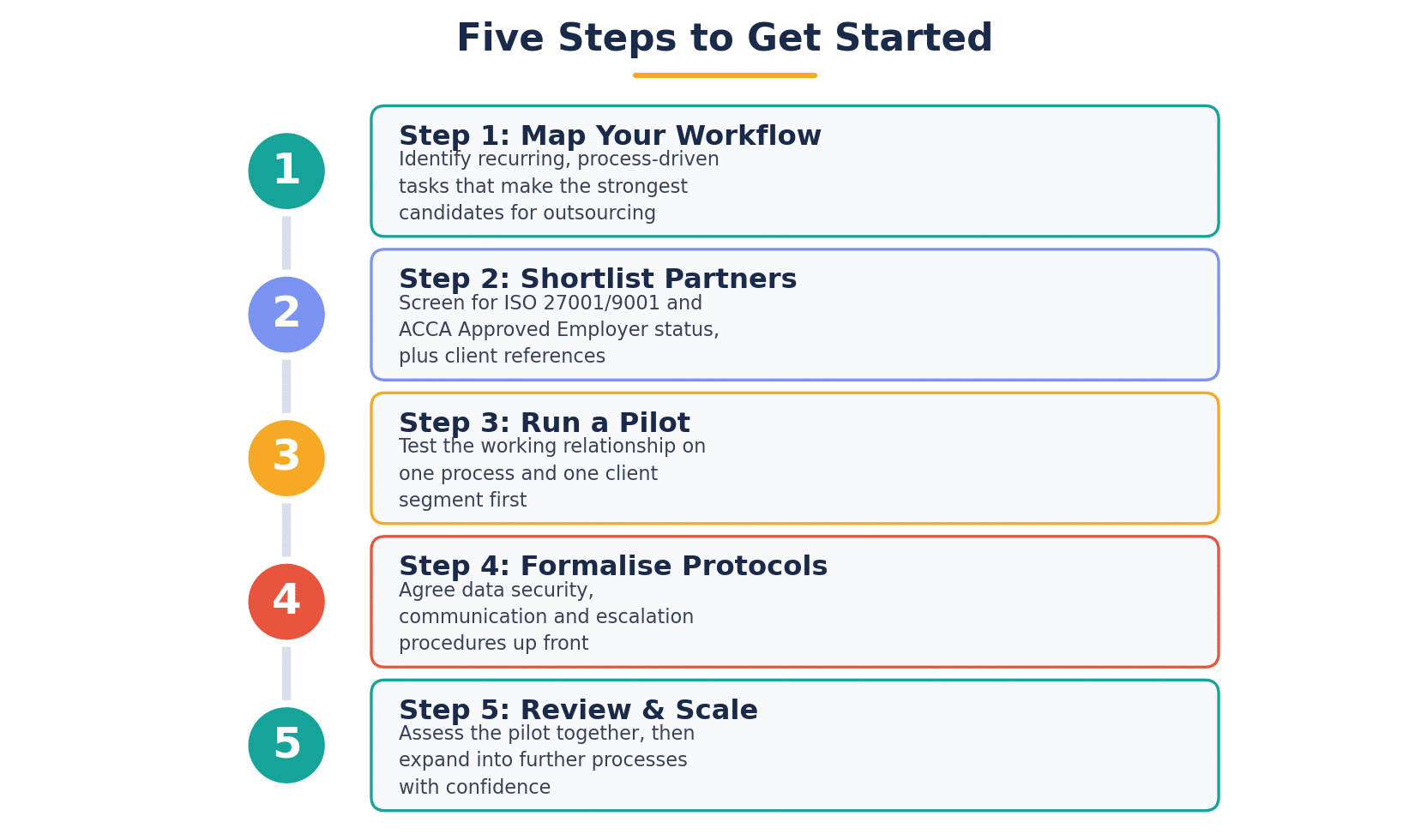
Getting started with accounting outsourcing in India works best as a staged process rather than a single leap.
Step 1: Map Your Workflow and Identify What to Outsource First
Start by listing the recurring, process-driven tasks that take up the most staff time, such as bookkeeping, VAT returns, payroll and management accounts. These are usually the best candidates for an initial engagement because they are well defined and easy to measure.
Step 2: Shortlist Partners Against Clear Standards
Look for outsourcing partners that can demonstrate independently verified credentials, such as ISO 27001 for information security, ISO 9001 for quality management, and ACCA Approved Employer status where relevant. Ask for client references from firms of a similar size to your own.
Step 3: Run a Pilot on a Defined Process
Rather than moving your whole back office at once, choose one process and one client segment to test the working relationship. A pilot makes it easy to measure turnaround time, accuracy and communication before you commit further.
Step 4: Formalise Data Security and Communication Protocols
Set out clearly how files will be shared, which systems the offshore team will access, how often you’ll review work, and what the escalation process looks like if something needs urgent attention.
Step 5: Review, Refine and Scale
Once the pilot has run through at least one full cycle, review turnaround times, quality and client impact together with your outsourcing partner, then expand into further processes or client segments with confidence.
Why Now: Regulatory Change Is Widening the Gap
The timing here is not incidental. In the UK, Making Tax Digital for Income Tax is being phased in for sole traders and landlords: the £50,000 income threshold from April 2026, dropping to £30,000 from April 2027 and £20,000 from April 2028. Each stage brings a new wave of clients into digital quarterly reporting, adding volume precisely when firms are already stretched. Australia and EU jurisdictions are moving through their own versions of increased digital reporting and compliance obligations. Firms that build this kind of offshore capacity now are better placed to absorb the extra volume without a corresponding jump in headcount.
If you're also weighing how Making Tax Digital and AI-driven change are reshaping bookkeeping roles, our related guides cover both in more depth.
The Bottom Line
Accounting outsourcing in India is no longer just a cost play. It is how a growing number of firms are creating the capacity to handle rising compliance demand while redirecting their best people toward advisory work and client growth. Firms that approach it deliberately, starting small, choosing partners with verifiable credentials, and scaling once the model is proven, tend to see the most durable results.
If you would like to talk through what a pilot engagement might look like for your practice, our team at Virtual Clone is happy to walk you through it.
Frequently Asked Questions
What is accounting outsourcing in India?
It is the practice of engaging a specialist offshore team, based in India, to handle bookkeeping, tax preparation, payroll and other accounting functions on behalf of a firm, using the firm's own systems and processes.
Is outsourcing accounting work to India secure and compliant with data protection regulations?
Reputable outsourcing partners operate under recognised frameworks such as ISO 27001 for information security, with defined access controls, encryption and audit trails to protect client data in line with UK, Australian and EU data protection requirements.
How much does outsourcing accounting to India typically cost?
Costs vary depending on the scope of work, the seniority of the team involved and the pricing model used. Most firms find that outsourcing reduces the overall cost of delivering compliance work compared with hiring and managing an equivalent team in-house, though it is worth benchmarking specific figures against your own numbers before committing.
Which accounting functions can be outsourced to India?
Bookkeeping, VAT and tax return preparation, payroll processing, management accounts, accounts payable and receivable, and year-end support are among the most commonly outsourced functions.
How long does it take to get started with this kind of offshore accounting arrangement?
Most firms can have a defined pilot process running within a few weeks of selecting a partner, though the timeline depends on how quickly data access, systems and communication protocols can be agreed.
Will our clients know we're using an offshore team?
Not unless you choose to tell them. Offshore teams typically work behind the scenes, inside your existing systems and under your firm's branding, so the client-facing relationship remains entirely with your practice.